Soham Murders: How we keep missing the point

Institutionalised incompetence about sexual abuse freed up Ian Huntley
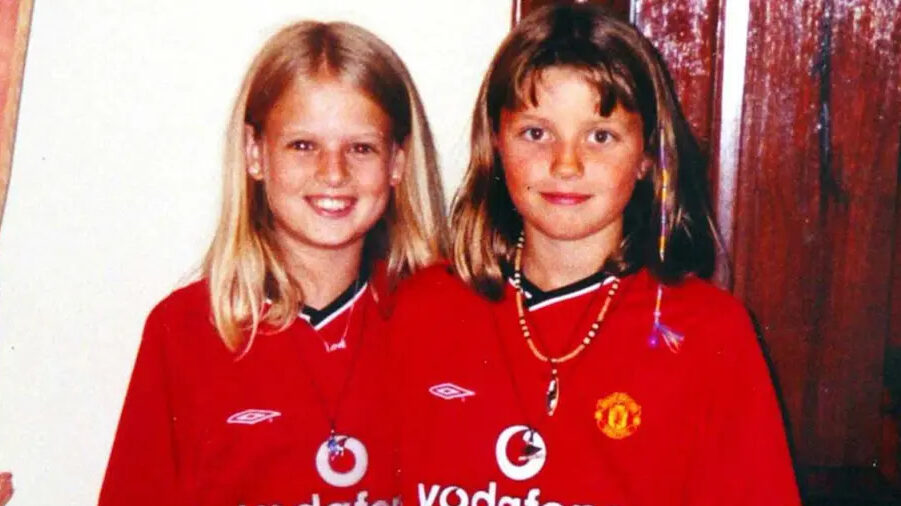
The death of Ian Huntley not only revives the grotesque killing of his victims, best friends Holly Wells and Jessica Chapman in the Cambridgeshire village of Soham in the summer of 2003, it should remind us of the political context that allowed Huntley to get away with serial harm to women and girls.
The Department of Health had been warned years earlier that the legacy of the valorised Cleveland Report in 1988 into child sexual abuse had, in fact, left the authorities not empowered but left ‘with one hand tied behind our backs.’
Worse, the government covered up the truth about child sexual abuse in Cleveland: it suppressed the fact that paediatricians and professionals had correctly identified signs of rape in children whose average age was eight. That calumny was confounded by the pessimistic and sceptical procedures promoted by the report – not least the arbitrary procedural division between family and non-family abuse.
Thus, institutionalised incompetence beset the investigation of abuse from Soham and theafter the organised sexual exploitation of girls in Rotherham, Rochdale, Telford, Oxford and London.
In my book Secrets and Silence I show the eerie connections:
Huntley was finally undone by an intrepid Press Association reporter, Brian Farmer, who covered the Soham hunt for the girls’ killer, and whose suspicions led the police to the door of school caretaker Ian Huntley and his partner.
And it was a woman watching television reports of the hunt who recognised Huntley and informed the Cambridgeshire police that he had form: he had previously been charged with rape in Humberside. Until that woman’s call, no one in Cambridgeshire knew that he was a danger to girls.
The Soham murders exposed the gruesome impact of structural impediments, incompetent ‘intelligence’ and the Cleveland Report itself – its inexplicable bifurcation of family and non-family abuse.
The Soham tragedy provoked two inquiries: Sir Richard Bichard’s inquiry, the Bichard Inquiry Report 2004 , condemned the hapless police response to Huntley – he had been involved in several attacks on girls, often runaways, but they were not recognised as child abuse and Huntley was not a family member; and in a commentary on the joint justice inspectorate’s criticism of police intelligence, Bichard was unforgiving: Humberside’s arrangements were ‘worthless’ and the Home Office had failed to organize a national intelligence-sharing system.
Sir Christopher Kelly’s Serious Case Review: Ian Huntley, North-East Lincolnshire 1995-2001, considered the response to runaways in neighbourhoods that were among the 30 most deprived in England. Huntley’s assaults on girls going back to 1995 had not received social services’ attention because he was not a family member. The girls being exploited drowned in systems starved of resources and skilled staff. Poor girls were rich pickings for predatory men because they weren’t ‘recognised as children’.
Sex and race
The Soham chronicle dramatised the consequences of the Cleveland Report’s family and non-family demarcation, an abstraction that framed administration and investigation but not real life, aggravated by parallel, and hostile, political processes:
The re-orientation – by both Conservative and Labour governments – of the welfare state away from social problems and social solutions towards targeted ‘anti-social’ children and their ‘problem’ families;
Girls in trouble were trouble – their pregnancies, boyfriends, truanting and their tracksuits, parodied in the TV comedy series Little Britain character, Vicky Pollard – they became objects of class parody and contempt.
And when services lost sight of male domination and sexism, they lost their ability to ‘see’ sexual abuse.
This was the political context of the next sexual abuse crisis: thousands of girls exploited outside the family by networks of men; they were treated with disrespect not only by their exploiters but by statutory services in towns and cities all over the country.
Their ordeals had only been recognised by specialist community sexual health services, sponsored by the Labour government in the 1990s to target teenage pregnancies. Child sexual abuse was not on the political agenda, but sexual abuse was what these community workers recognized.
Between the mid-1990s and mid-2000s, in Rochdale in Greater Manchester, Sara Rowbotham, a youth sexual health specialist, referred more than 180 sexual exploitation cases to the police and social services where they fell into a void. Rowbotham later told MPs that the children were treated with ‘absolute disrespect…. They were discriminated against. They were treated appallingly by protective services.’ A Greater Manchester review concluded that the girls had not been treated as victims and, ‘the men weren’t viewed as sex offenders, just men of all ages from one ethnicity taking advantage of kids….’ This was ‘a depressingly familiar picture … in many other towns and cities across the country.
On and on it went – girls of Asian heritage in Telford, white girls in Rotherham… the synergy of race and sex was, of course, always salient. And always, contempt for girls: Asian men’s targeting of white girls, white men’s targeting of any girls.
Typically, however, the far right and the political establishment racialised the victims and the perpetrators when it profiled Asian men’s abuse: the former Times columnist David Aaronovitch, for example, declared ‘let’s be honest, there’s a clear link with Islam.’
But what link?
The habitual failure to effectively address sexual abuse and exploitation, whether in families, in neighbourhoods, or in international human trafficking systems – is re-interpreted as the effects of the ‘twisted dogma of multi-culturalism’ reckons media expert Katie Elliott. So, the problem is traduced as Muslim men and white wokey political correctness, and, of course, it is enlisted by far right-wing populism promoted by Elon Musk, Tommy Robinson’s crews and Reform.
Two decades on from Soham, and four decades on from the misguided Cleveland Report, the point is that we keep missing the point.
Photograph: Holly Wells and Jessica Chapman / PA Media
Responses